
by Razia Hussaini
This is a guest post from Inanna’s partner, the EmpowerHer Initiative. Through EmpowerHer, Inanna is platforming the voices of women and girls in Afghanistan. Learn more about EmpowerHer here.
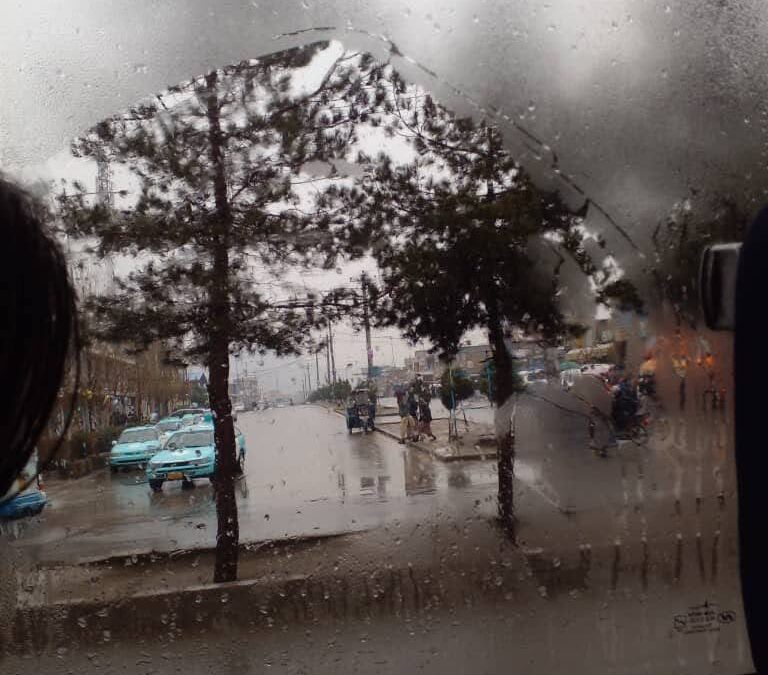
Kabul and Herat were once cities full of movement, voices, and dreams. Their streets were crowded with people rushing to work, women walking freely, and children going about their daily lives. Today, those cities still stand, and their streets remain, but something has changed. The sound of life feels quieter than before.
A few days ago, the Taliban reportedly detained several young girls and women who were wearing full hijab. They claimed that these women were not properly covered because their faces were visible. No one knows where these girls and women were taken or what condition they are in. As a result, many people who were exhausted by these circumstances decided to raise their voices.
Women and men gathered in Jebrail, Herat, to protest and demand freedom. They stood together, believing that speaking out was a right that belonged to everyone. However, they were met with violence, including reports of direct gunfire and the arrest of protesters. Many people were killed or injured, while others returned home carrying questions that could not be answered.
Following the protest, reports emerged that Taliban authorities were searching hospitals and homes to identify those who had participated. Conversations became shorter, people became more cautious with their words, and the streets grew quieter. Later, reports spread that some of the detained girls and women had been transferred to other locations, including Mazar-e-Sharif and Kabul. Their whereabouts and conditions remain unknown.
As fear spread, many girls and women stopped leaving their homes. In Herat, families became increasingly reluctant to allow their daughters outside. Similar concerns emerged in Kabul, Mazar-e-Sharif, and other provinces. In some cases, people even stopped asking questions because asking questions itself felt dangerous.
The situation for women and girls in Afghanistan has become increasingly difficult. Although many women wear full hijab and cover their bodies, restrictions continue to expand. Women are expected to cover their faces, avoid colorful clothing, and refrain from wearing perfume in public. They are also discouraged from speaking loudly in public spaces. It is now the fifth year of Taliban rule, and secondary schools and universities remain closed to many girls.
These restrictions have profoundly affected people’s lives, especially the lives of women and girls. No one knows what tomorrow will bring or what new limitations may be imposed in the future.
I am a girl living in Kabul under these restrictions. It has been about two weeks since I last went outside. Some people say that even stricter rules may soon be introduced in Kabul. Because of these fears, many families no longer allow their daughters to leave home. Many of us remain indoors, uncertain about our futures.
Through these experiences, I have realized that laws and regulations do not only shape systems; they also shape emotions. They influence how people imagine their futures, plan their days, and pursue their dreams. These changes affect how people move, study, and express themselves. They are not always announced publicly or written on large signs, but they can be felt in every corner of the city.
Yet despite these challenges, I believe that restrictions cannot stop girls from continuing their path. Many girls are growing stronger in the face of adversity. Even when opportunities become limited, their dreams remain alive. Voices do not disappear simply because they become quieter. Sometimes, they grow stronger in silence.
The streets of Kabul and Herat may feel quieter today, but they are not empty of dreams. Behind closed doors, in notebooks, in thoughts, and in hearts, stories are still being written. And one day, perhaps, those stories will be heard again.
Learn more about the EmpowerHer Initiative here.
Razia Hussaini is an aspiring writer from Afghanistan. She loves writing and storytelling. She wants to become a journalist and become the voice of the unheard people. Razia believes that writing is a powerful way to share stories and ideas. She lives in Afghanistan, where many Afghan girls and women are deprived of access to education and the freedom to speak openly about their rights. However, these challenges have not stopped her from following her passion for writing. Instead, she has chosen writing as a way to represent the voice of Afghan girls living under the Taliban regime. She writes about her emotions, experiences, and issues that Afghan women are often not allowed to talk about freely. Razia believes that one day, her voice will be heard.